




Bali Net Zero Emission (NZE) 2045, a target set by the Provincial Government of Bali to achieve zero emissions by 2045–15 years ahead of the national target–is not only ambitious but also demands a strong commitment to ensure that this ambition brings benefits to everyone, not just a select few. It requires public participation in the process of achieving Bali NZE 2045 to ensure inclusivity and sustainability.
In October 2024, a pilot project using a bottom-up approach to energy transition was implemented by the Institute for Essential Services Reform (IESR) through the Renewable Energy-Based Village” or “Desa Berbasis Energi Terbarukan” (DBET)“. DBET aims to support villages in Bali in utilising the renewable energy resources available in their areas to power social and economic activities. At the sub-national level, the initiative aligns with the Bali’s Roadmap to Net Zero Emissions by 2045 in the Electricity Sector, which outlines the role of rooftop solar and small-scale village power plants to substitute electricity demands as foundational steps toward the target. But most importantly, at the local level, DBET means clean and accessible energy for the community.
Because DBET puts people first, assessing only technical parameters, such as renewable energy potential, is not enough. Locations are selected based on additional considerations, including village demographics, public facility energy needs, livelihoods that could benefit, community interest and engagement, as well as local government support and commitment. All these factors are essential to ensure that once renewable energy technologies are installed in the village, local communities remain committed to participating in capacity-building activities, maintaining the systems and technologies, and leveraging financial benefits to support the village economy. In fact, DBET always involves the community directly in the installation of renewable energy systems, reflecting public acceptance and willingness to participate. These elements ensure that the community can continue to benefit independently from the project.
As of today, three villages in Bali have become the locus of Desa Berbasis Energi Terbarukan (DBET): Baturinggit Village in Karangasem; Batununggul Village in Nusa Penida, Karangasem; and Banjarasem Village in Buleleng. Each village now has solar panels installed for public facilities and has appointed local energy champions responsible for the operation and maintenance of the systems. One of the DBET-supported public facilities is the bale banjar. With Bali’s strong communal culture, the bale banjar plays a central role in community life as a gathering place for cultural, social, and religious activities.
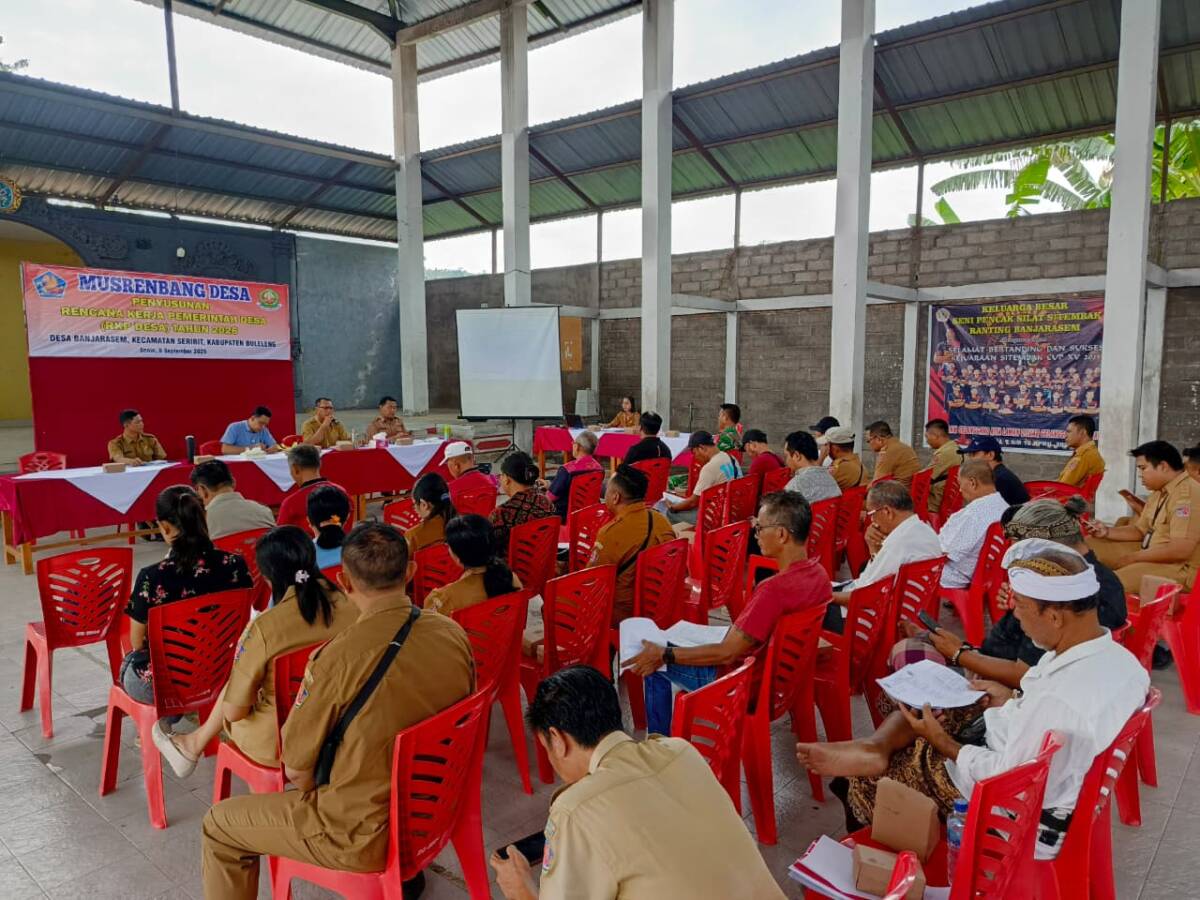
In Banjarasem Village, Buleleng, the rooftop solar system now powers the bale banjar’s community-based health services (pos pelayanan terpadu/posyandu) for maternal and child health, as well as services for the elderly–at zero electricity cost. According to Banjarasem’s head of village (also known as Perbekel), I Made Sirsa before the solar installation, the bale banjar’s electricity bill was around IDR 500,000.00 per month. After installation in August 2025–and after conducting multiple posyandu activities and village meetings throughout August to October–electricity consumption from PLN has dropped significantly. Only 4 kWh of prepaid credit has been used, equivalent to around IDR 4,459.00
The installation of solar panels at the locuses of DBET to support a range of communities’ activities is the first step to a long-term plan, including capacity building for DBET local champions and building a community-based economic system supported by renewable energy. In the future, the benefits experienced by the community from this solar installation are expected to become a success story that inspires the wider adoption of renewable energy, demonstrating that it can provide a clean energy source while also contributing to productive activities and, in the long term, improving community well-being.