




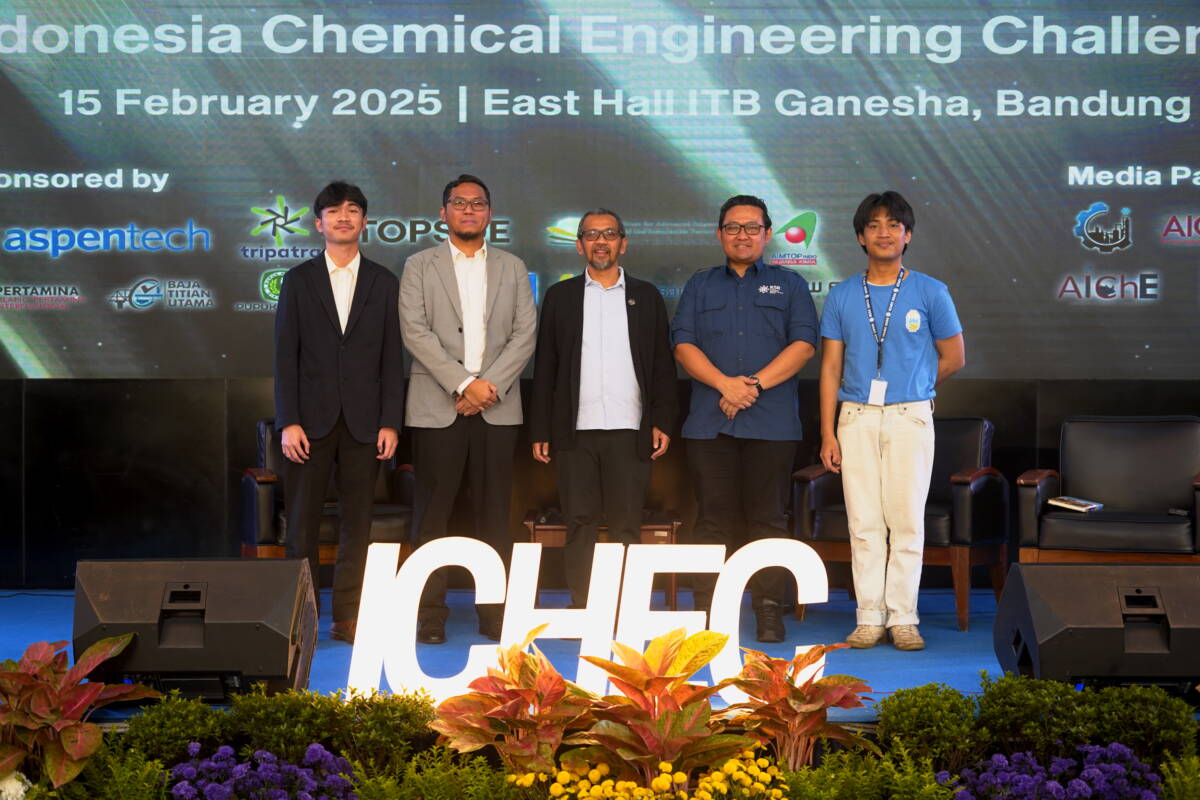
Jakarta, February 20, 2026 – Energy transition is often perceived as an expensive agenda that burdens the economy. However, according to Reananda Hidayat, Sustainable Mobility, Clean Environment, and Buildings Staff at IESR, this assumption is no longer relevant given recent developments. According to him, renewable energy technology has actually become the most economical choice today.
“Many still think that renewable energy is too expensive and uncompetitive compared to fossil fuels. In fact, over the last decade, the cost of generating electricity from solar and wind power has dropped significantly,” Reananda emphasized during the Indonesia Chemical Engineering Challenge (IChEC) 2026 seminar on Sunday (Feb 15).
Citing data from the International Renewable Energy Agency (IRENA), Rean noted that onshore wind power is now the cheapest new source of electricity globally, with an average Levelized Cost of Electricity (LCOE) of approximately USD 0.034 per kWh. This is followed by solar photovoltaics (PV) at USD 0.043 per kWh and hydropower at USD 0.057 per kWh. These figures prove that the energy transition is no longer just a matter of environmental idealism, but a rational, data-driven economic decision.
“With technology becoming increasingly economical, a shift in perspective is needed from stakeholders. Take, for example, the power system planning in the UK during their coal phase-out and renewable energy expansion through the National Grid ESO framework. Initially, the power system was largely designed based on the lowest short-term generation costs, meaning coal and gas plants were maintained because the infrastructure was already in place,” Rean explained.
However, when a multi-objective optimization approach was applied considering not just costs, but also carbon emissions, fuel price volatility, system reliability, and long-term risks the results changed drastically. The model showed that although wind and solar require higher initial investment, their fuel costs are zero and emissions are very low, making them systemically cheaper in the long run.
“When carbon pricing and fuel price uncertainty are factored into the calculation, coal is no longer economically attractive. As a result, in about a decade, the share of electricity from coal in the UK dropped from around 40% in 2012 to nearly zero. That decision wasn’t solely driven by the environment; it was the result of integrated modeling that balanced economic efficiency, emission reduction, and system reliability,” Rean added.
Reflecting on this experience, Rean stated there are important lessons for Indonesia. Policy consistency is key. The growth of the solar manufacturing industry in China shows that clear long-term targets, measured incentives, and regulatory certainty can build investor confidence and accelerate industrial scale. Countries that moved early in the renewable energy and electric vehicle (EV) supply chains have successfully secured global market shares.
“For Indonesia, with its vast nickel reserves, the opportunity is not just as an exporter of raw materials. Value can be created through downstream processing, battery production, and increasing technological capacity. However, this transition must also be managed socially. Europe’s experience in retiring coal mines shows that without retraining programs and regional economic diversification, workers and local communities risk being left behind. A ‘just transition’ approach is an essential requirement for industrial transformation to remain politically and socially stable,” Rean concluded.