




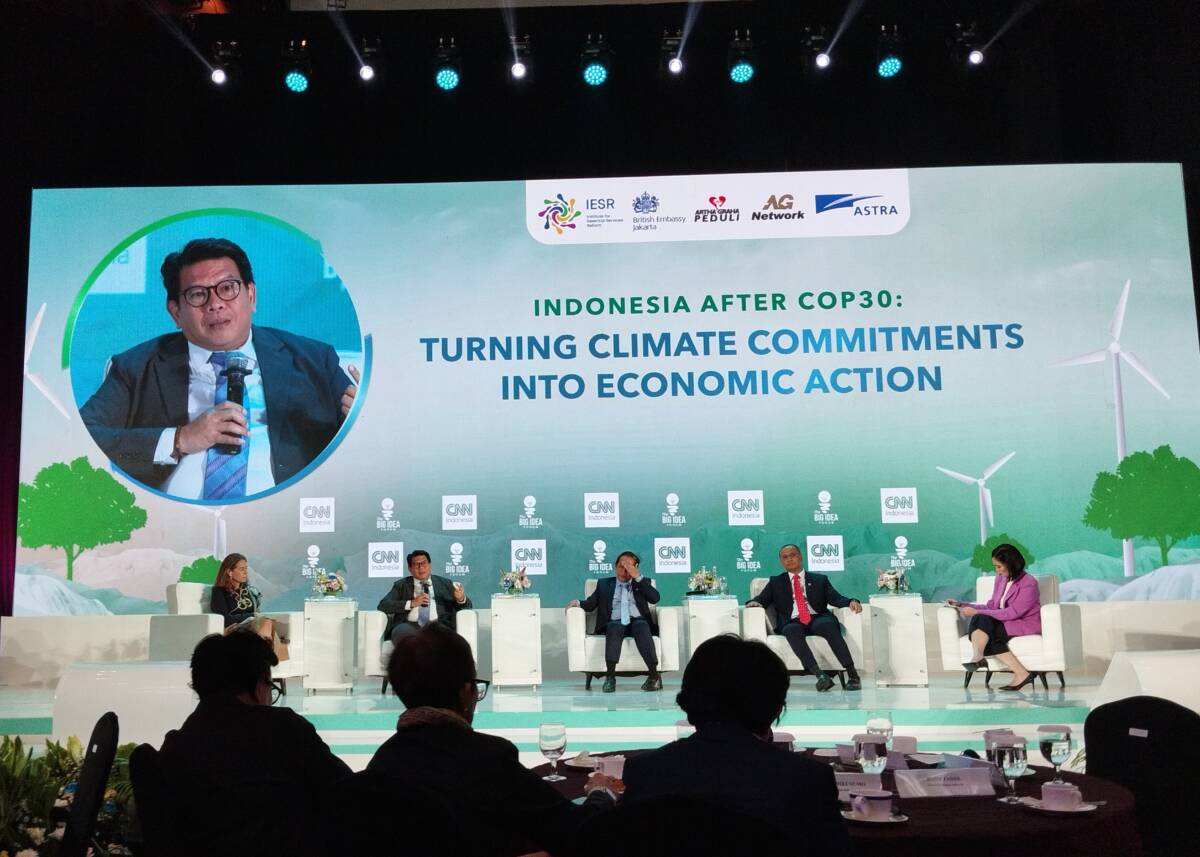
Jakarta, November 26, 2025 – The UN Climate Summit, or Conference of Parties (COP) 30, is being held amidst global geopolitical uncertainty. As an archipelagic nation vulnerable to the impacts of the climate crisis, Indonesia has a vested interest in ensuring its emissions reduction agenda aligns with the 1.5°C trajectory of the Paris Agreement.
Fabby Tumiwa, Chief Executive Officer (CEO) of the Institute for Essential Services Reform (IESR), stated at the CNN Indonesia Sustainability Summit that there has been a setback, namely the lack of a commitment to phase out fossil fuels. The document, “Global Mutirao: Uniting Humanity in Global Mobilization Against Climate Change,” reminds the world that time is running out to mobilize efforts to limit global temperature rise to 1.5°C. Based on the current Second Nationally Determined Contribution (SNDC) commitment, there is still a global emissions reduction deficit of 9-15 gigatons CO2e to reach the 2-degree mark (well below 2 degrees). Therefore, the Second Nationally Determined Contribution (NDC) is crucial for strengthening each country’s emission reduction commitment, including Indonesia.
“There are several things (Indonesia) can do to strengthen its emission reduction efforts. First, address methane gas emissions produced by waste and gas flares in the oil drilling industry. This aligns with the Global Methane Pledge, signed by Indonesia in 2021, which commits the world to reducing methane gas by 30% by 2030,” said Fabby.
Fabby emphasized that there is no need to debate between economic growth and the need to reduce emissions and climate commitments. Various low-carbon technologies are available to reduce emissions without sacrificing economic growth. Measurable targets in each sector, the use of low-carbon technologies, and access to funding are key to aligning economic growth and emission reduction commitments. Furthermore, consistent leadership is needed to ensure climate commitments are implemented.