




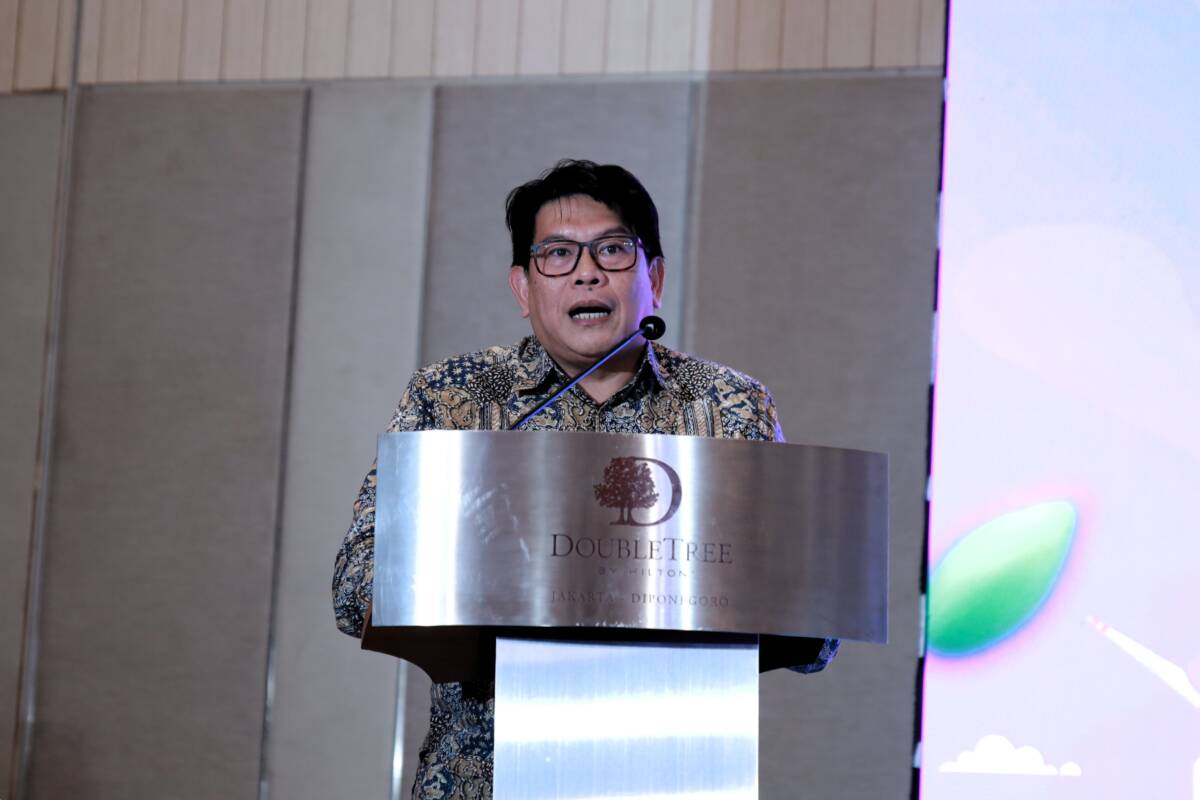
This statement is attributed to Fabby Tumiwa, Chief Executive Officer of the Institute for Essential Services Reform (IESR).
In general, the performance of the Ministry of Energy and Mineral Resources (MEMR) shows disappointing results according to the following data:
1. Oil Lifting
The Ministry of MEMR reported an average oil lifting (including Natural Gas Liquid/NGL) throughout 2025 of 605.3 thousand barrels per day (bpd), meeting the 2025 State Budget (APBN) target of 605 thousand bpd. In 2024, the average oil lifting was approximately 579.7 thousand bpd, lower than the 2024 APBN target of 635 thousand bpd.
IESR Response: While oil lifting was reported slightly above target (0.3%), the 2025 target of 605 thousand bpd is very low—far below the 2024 target of 635 thousand bpd. Since 2020, oil lifting targets have been continuously lowered from 707 thousand bpd; compared to 2020, the 2025 target has dropped by 14.4%. Furthermore, the Ministry’s 2025 calculation includes NGLs, which differ characteristically from crude oil. Without NGLs, it is likely the volume would miss the target. In H1 2025 reports, there was a discrepancy between the Ministry’s figures (608.1 thousand bpd) and SKK Migas (579.3 bpd), as the latter excludes NGLs.
Production remains far from the 1 million bpd by 2030 goal set by the previous administration. Consequently, Indonesia remains unable to reduce the rising imports of crude oil and fuel, which average 1 million bpd.
2. Renewable Energy Achievements
The Ministry reported cumulative installed power plant capacity in 2025 at approximately 7 GW, with a renewable energy (RE) mix reaching 15.75%, an increase of 1.1% from the 14.65% achieved in 2024.
IESR Response: Renewable energy performance is off-target. Compared to the 2024 total installed capacity of 14.3 GW, the 2025 addition was only about 1.3 GW. Although the RE mix target was revised down from 23% to 17%–19% in the new National Energy Policy (KEN), the 15.75% achievement still falls below this revised target. Additionally, the reported growth was largely driven by rooftop solar installed by consumers, while RE projects planned in PLN’s Electricity Supply Business Plan (RUPTL) failed to meet targets.
According to the Indonesia Energy Transition Outlook (IETO) 2026, under a “No Further Effort” scenario, RE will only reach 41–43% by 2060, causing emissions to soar. Conversely, an “Extra Effort” scenario (77% RE) could achieve high GDP growth while slashing emissions to 436 MtCO2e by 2060.
3. 2025 Energy Investment Realization
The Ministry recorded investment in New Renewable Energy and Energy Conservation (EBTKE) at USD 2.4 billion in 2025, exceeding the USD 1.5 billion target. In 2024, investment reached only USD 1.8 billion against a USD 2.6 billion target.
IESR Response: RE investment is still not optimal and lags behind global trends, where fossil fuel investment is no longer the primary focus. To increase RE investment, Indonesia needs policy improvements, fiscal incentives, and accelerated project implementation.
IESR assessments indicate Indonesia requires USD 30–40 billion per year in transition investment to reach peak emissions by 2030 and Net Zero by 2050. Furthermore, Indonesia must foster a domestic “clean tech” industry (solar panels, batteries) to ensure energy security and job creation rather than relying solely on imports.
4. 2025 Coal Production
National coal production in 2025 reached 790 million tons, exceeding the target of 739.6 million tons. The Ministry has set the 2026 production target at approximately 600 million tons.
IESR Response: Since 2020, coal production has consistently exceeded targets due to export demand and weak quota discipline, highlighting the continued dominance of fossil fuels. As the global energy transition weakens coal prices, IESR urges the government to prepare for declining state revenues and the risk of stranded assets in the coal industry, similar to the oversupply pressures currently seen in the nickel sector.
5. Reduction of Diesel Imports via Biodiesel Mandatory
The Ministry claims the B40 policy (40% palm oil, 60% diesel) effectively reduced diesel imports to approximately 5 million tons in 2025.
IESR Response: The government must carefully calculate the trade-offs of using Crude Palm Oil (CPO). Stagnant CPO production means increasing biofuel use could threaten food supplies, industrial raw materials, and export revenues.
Furthermore, the threat of reduced exports should not justify massive new oil palm expansion or forest conversion, which destroys carbon sinks and worsens the climate crisis. IESR recommends seeking sustainable feedstocks and aggressively pushing for vehicle electrification to reduce fuel demand.
6. Increased Rural Electricity Access
The Rural Electrification on 2025 program reportedly reached 77,616 customers in 1,516 locations, aiming for 100% rural electrification by 2030.
IESR Response: While positive, there remains an inequality in quality, especially in frontier/remote (3T) areas where electricity is often not available 24/7.
Rapid improvement can be achieved through modular solar PV and Battery Energy Storage Systems (BESS). For a minimum consumption of 1.5 kWh/day, remote homes should receive at least 1 kWp of rooftop solar and 3 kWh of battery storage. To ensure sustainability, management should be decentralized to local entities like cooperatives or village-owned enterprises (BUMDes) to prevent projects from falling into disrepair.