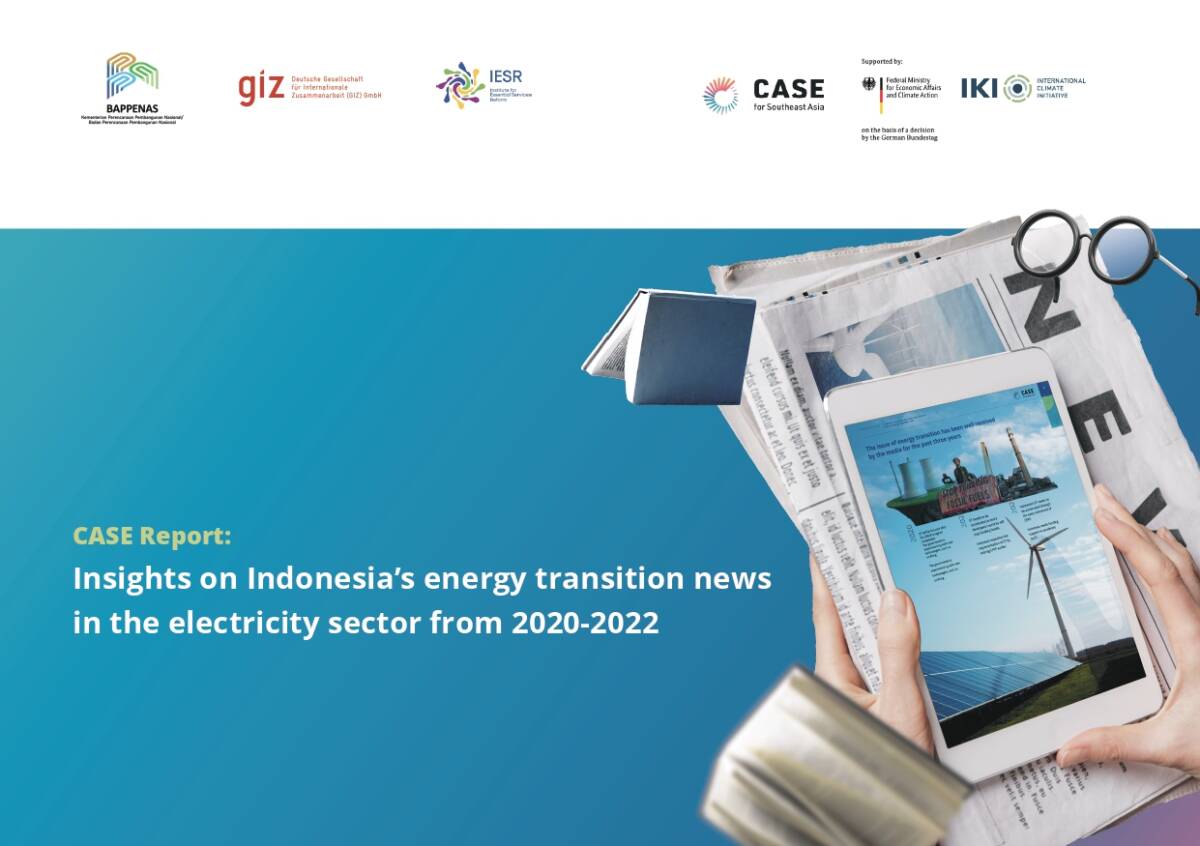
Insights on energy transition news in the electricity sector in Indonesia from 2020- 2022
This collaborative report between IESR and CASE is based on a media monitoring analysis of more than 11,000 news stories




This collaborative report between IESR and CASE is based on a media monitoring analysis of more than 11,000 news stories
The book of Mulai dari Sini: Memahami Transisi Energi di Indonesia (Start from Here: Understanding Energy Transition in Indonesia) is
The energy sectors in South Africa, Indonesia, and Vietnam are still dominated by coal-fired power generation, despite efforts to increase the share of renewable energy. These three countries face socio-economic challenges such as inequality, poverty, and high unemployment rates that need to be considered in the transition away from coal.
This study assesses the current air quality and its health impacts, and the associated external economic costs of coal power plants in Indonesia.
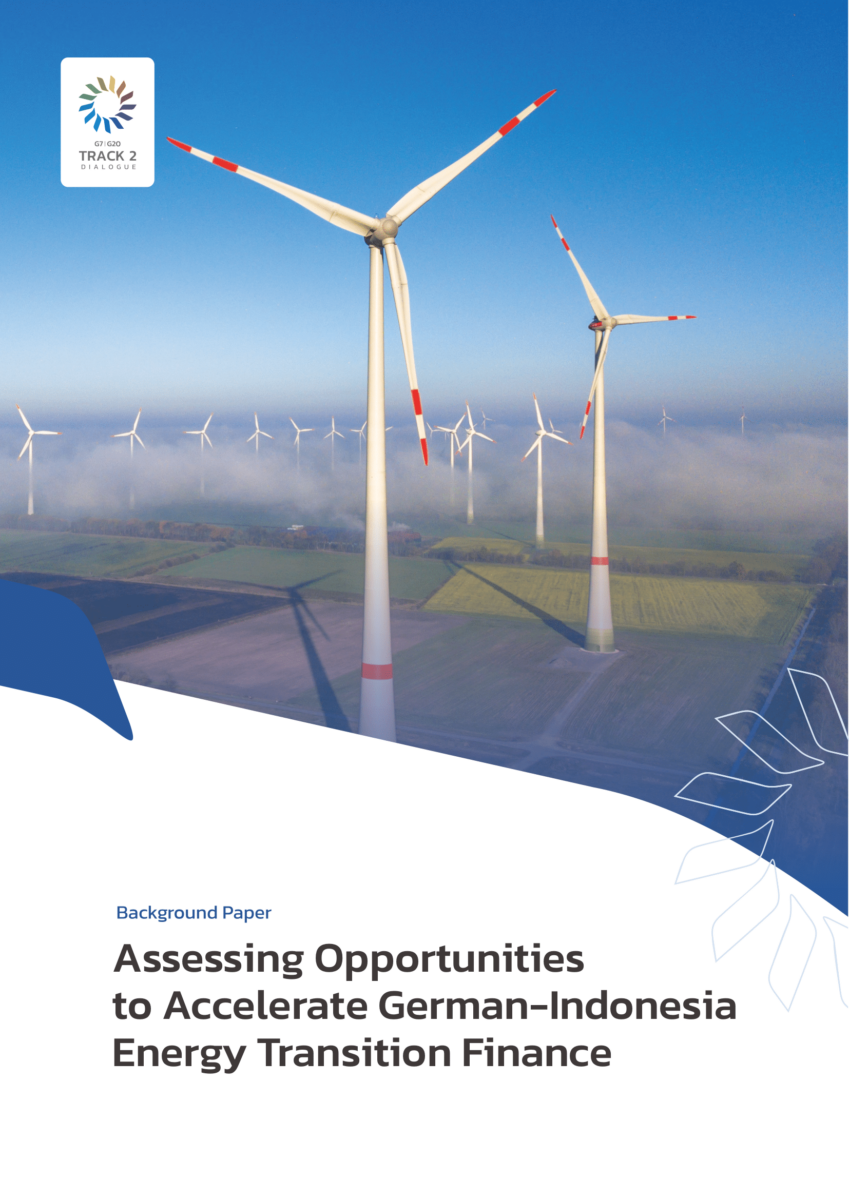
This paper aims to shed light on the climate financing landscape in both Germany and Indonesia, with a primary focus on climate mitigation, particularly in the energy sector. With regard to Germany, this paper provides an overview of Germany’s climate financing flows, structure, and international climate finance trends. Moreover, it also takes into account the recent political discourse in Germany as well as the geopolitical conditions that followed Russia’s invasion of Ukraine, and the ensuing energy crisis in Europe. With regard to Indonesia, this paper provides an outlook on Indonesia’s climate mitigation targets and achievements, recent trends with regard to energy transition financing in the country, and potential avenues for further provision of international climate finance to support its energy transition.
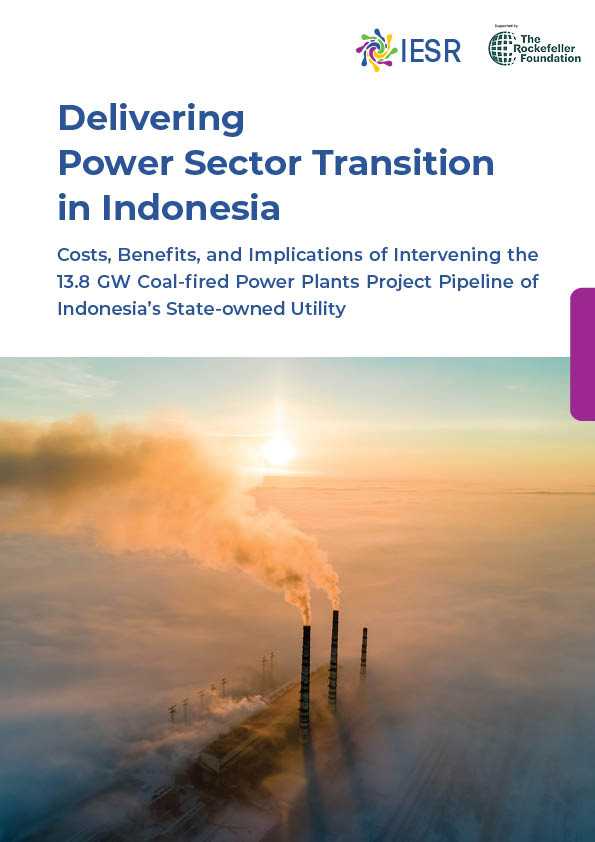
This study discovered that canceling nine units of coal plants totaling 3 GW currently under construction will have no effect on reliability or cost and that early retirement is the cheapest option in terms of investment and carbon cost compared to achieving the 2050 net-zero goal.
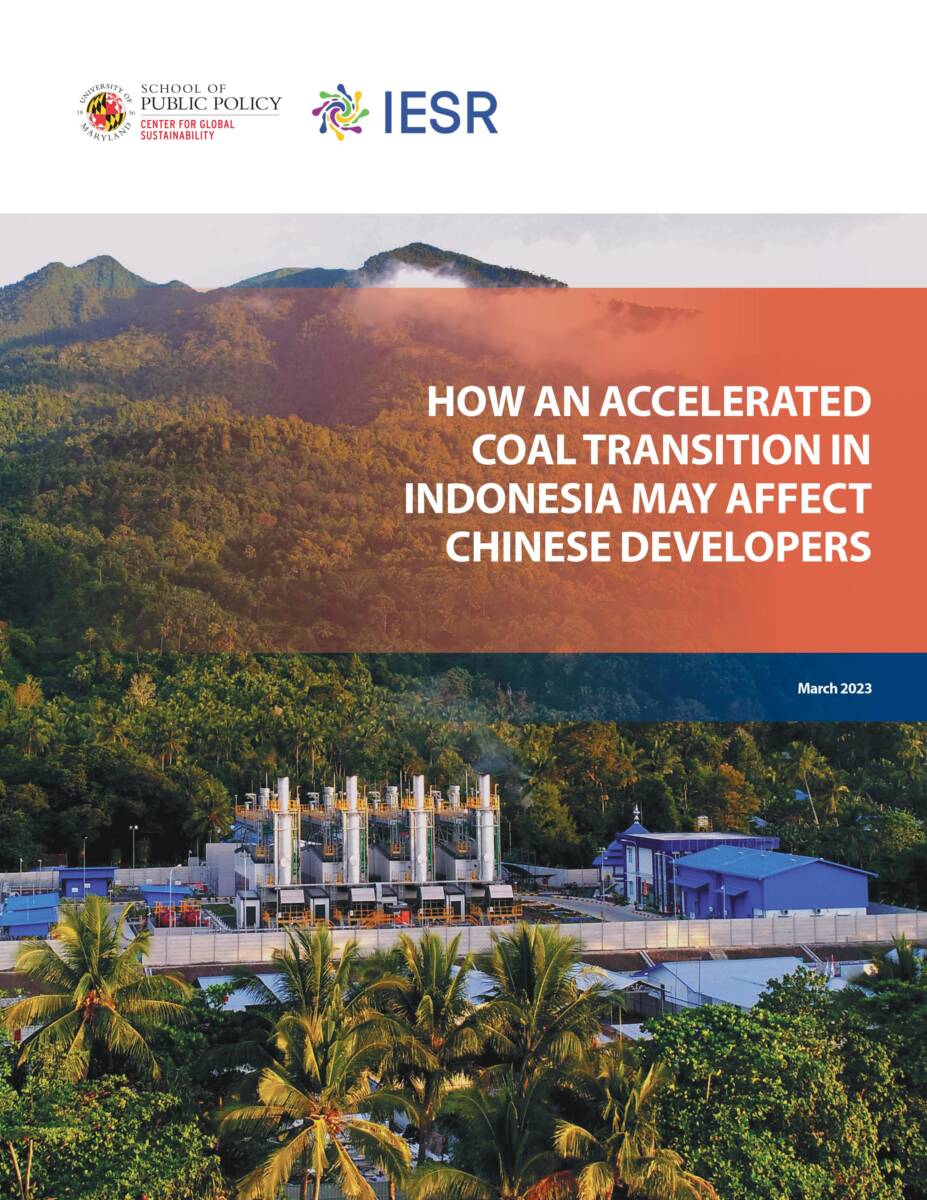
To help international developers, particularly Chinese companies, better understand the potential implications of Indonesia’s JETP on their overseas coal power projects, this paper summarizes one possible pathway with detailed early retirement schedule for Chinese-involved IPP plants under Indonesia’s accelerated coal transition
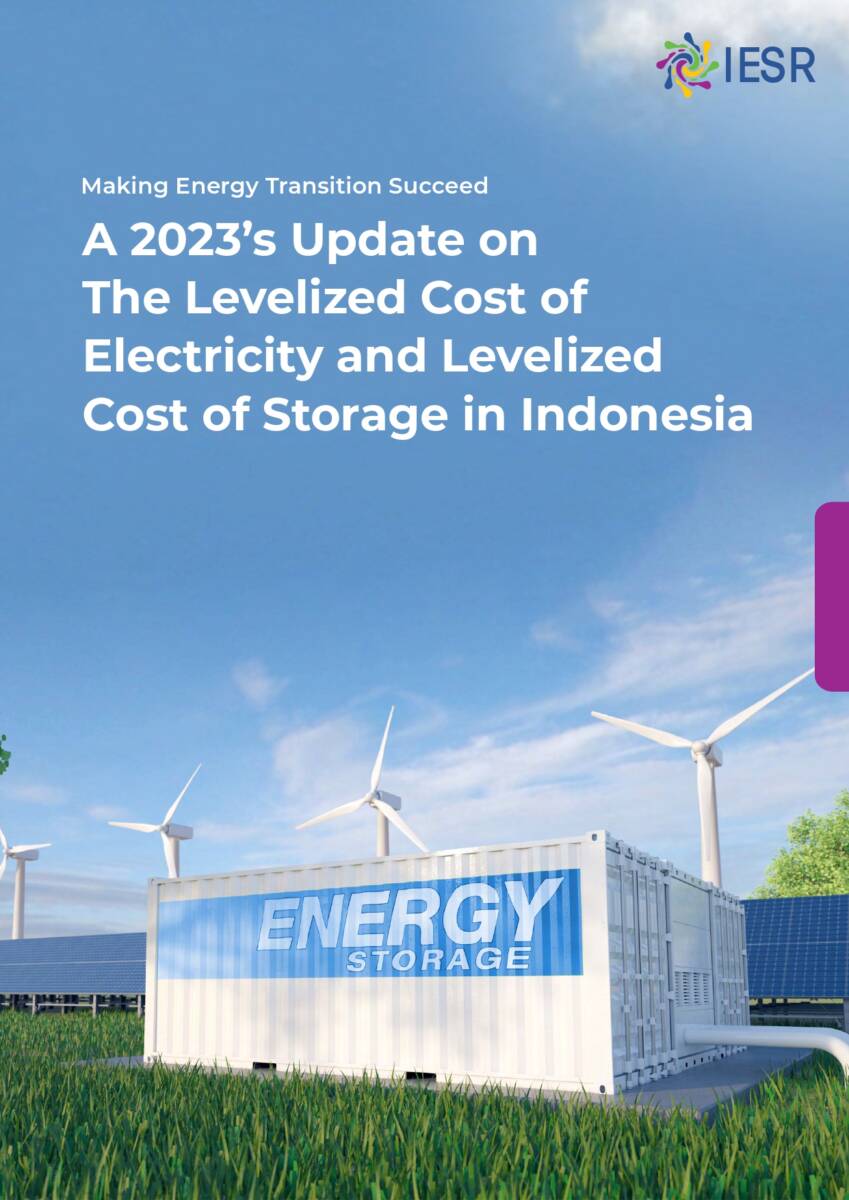
IESR first published the LCOE report and tool in 2019. This year we updated our tool with more technologies and the new economics of energy technology. IESR’s 2023 Update of LCOE and LCOS shows that renewables have become more competitive than fossil fuels. Nevertheless, renewable energy adoption in Indonesia remains low due to the government’s own policy of maintaining massive subsidies for fossil fuels. As Indonesia plans to achieve net-zero emissions by 2060 or sooner, and the power sector’s emissions peak in 2030, energy subsidy and pricing reform should be prioritized. With that, the utility should move faster to deploy renewables and retire coal plants sooner.
Indonesia Electric Vehicle Outlook 2023 as one of IESR’s flagship reports. IEVO intends to track and monitor the progress of the energy transition in the transportation sector. This report is our contribution to raising awareness and understanding among all stakeholders, as well as shaping priorities and policy enhancements of actions toward transportation decarbonization to meet the net-zero emission target by 2050.
IETO 2023 arrives just as Indonesia embarks on its journey to transform its energy system. After President Jokowi pledged that Indonesia would reach net-zero emissions by 2060 or sooner, the energy policy began to shift away from fossil fuels and toward clean energy last year. The obvious shift occurs in the power sector, where PLN’s 10-year RUPTL (2021-2030) for the first time includes more renewable power plants than fossil fuels. The decline in electricity demand, which was exacerbated by the COVID pandemic, compelled PLN to drastically reduce its coal-fired power plants.
The NZE objective also accelerates the power sector’s emission peaks relative to the initial plan. A USD 20 billion Just Energy Transition Partnership (JETP), launched during the Indonesia G20 summit, stipulated that emissions from the power sector will peak by 2030 and be capped at 290 MtCO2e. Even though the JETP target is not aligned with the 1.5°C Paris Agreement, it is still a good measure that could allow the rapid deployment of renewable energy, the improvement of energy efficiency measures, and the initiation of the coal phase-down before 2030. There is still a great deal of work to be done to make the energy transition truly happen and be sustainable.
This study aims to identify the supply chain and existing conditions of the solar industry in Indonesia and identify the types of industries that have the potential to be developed. The results of the analysis of this study are expected to become recommendations for making a roadmap for the solar panel component industry in Indonesia.
This study aims to provide a methodology and projections of a higher renewable energy penetration to Indonesia’s power system. Renewable energy sources used as candidate power plants in this study were solar, wind, and biomass while for the geothermal and hydro power plants only consider the development of the ones that are already in the current RUPTL pipeline.
